
In the race to innovate, most companies are still using an outdated playbook. They search for “culture fits”—individuals who mirror their existing teams in thought, background, and approach. However, the most successful organizations of the future won't be built by perfect squares fitting into perfect holes. They will be built by “irregularly shaped” thinkers who challenge the status quo.
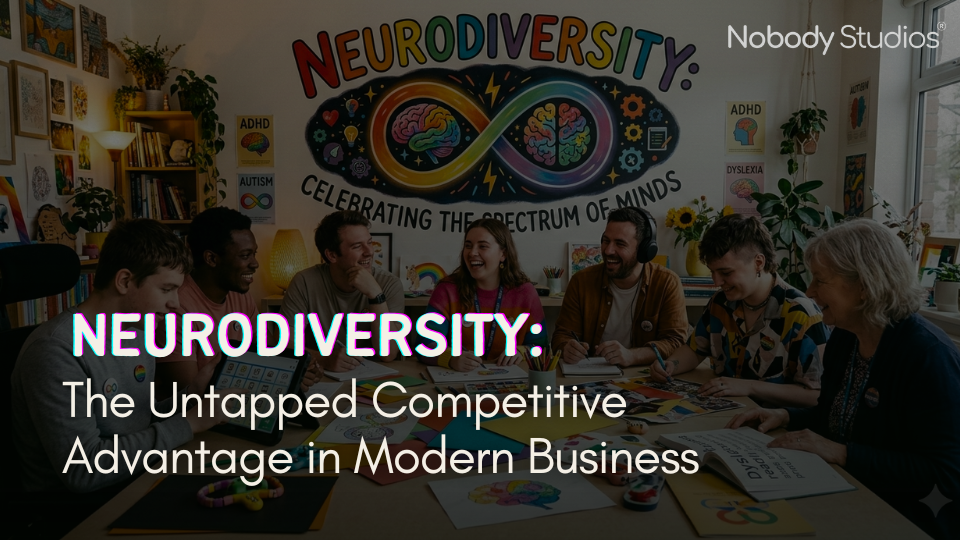
Neurodiversity—the concept that neurological differences like ADHD, dyslexia, and autism are natural variations of the human brain rather than deficits—is emerging as a powerful competitive advantage. When organizations move beyond labels and embrace different ways of processing information, they unlock a level of problem-solving that traditional teams simply cannot match.
Why “Different” is a Business Superpower
At its core, neurodiversity is about cognitive diversity. In a business landscape where complex problems require novel solutions, having a team that thinks linearly is no longer enough. Neurodiverse individuals often possess specialized skills that are vital for high-growth environments:
- Non-Linear Thinking: The ability to connect dots that others don't see, leading to breakthrough innovations.
- Critical Analysis: A natural tendency to question “why things are done this way,” which is essential for vetting new ideas.
- Hyper-Focus and Resilience: Many neurodiverse individuals have the capacity to dive deep into complex projects for extended periods, driving them toward completion where others might lose steam.
- Unique Interpretation: As Dr. Erik Reis notes, “The brain is truly like unlimited in its capacity to be able to grow, change, and adapt”. A person with dyslexia, for instance, may interpret a document or a market trend from a perspective that identifies risks or opportunities a standard reader would overlook.
Moving Beyond the Label
One of the greatest hurdles to leveraging neurodiversity is the medicalized “label.” Society often uses terms like ADHD or dyslexia to categorize what someone cannot do, rather than what they can.
True leadership involves looking past the diagnosis to the human in front of you. Dr. Reis emphasizes that “you’re not the diagnosis you’ve been given. You’re the individual that’s sitting in front of me”. For a workplace to be truly inclusive, it must value these “differently abled” traits as assets that help the company innovate and scale.
4 Strategies for Building a Neuro-Inclusive Culture
Building a neuro-inclusive workplace requires more than just a manifesto; it requires intentional, systemic change.
1. Redesign the Interview Process
Traditional interviews often reward social extroversion and eye contact rather than actual job competency. To attract neurodiverse talent, consider:
- Casual Assessments: Allowing candidates to demonstrate skills in relaxed, “casual interaction” settings rather than high-pressure boardrooms.
- Remote Options: Offering virtual interviews allows candidates to remain in a controlled environment where they feel most comfortable.
2. Implement Low-Cost, High-Impact Accommodations
Many organizations shy away from neurodiversity due to feared costs, but research suggests most accommodations—such as providing written instructions or noise-canceling headphones—cost less than $500.
3. Foster Psychological Safety
When employees feel stressed or fearful of being “different,” their brains literally shut down the areas responsible for critical thinking. Creating a sense of belonging activates the brain's “power centers,” empowering people to stay focused and engaged.
4. Train for Unconscious Bias
Educating hiring teams and managers on microaggressions and cognitive bias is essential. Without this training, a manager might mistake a candidate’s conversational tangents for a lack of focus, when it is actually a sign of a highly associative, creative mind.
The Bottom Line
The significant problems we face today cannot be solved with the same level of thinking that created them. By embracing neurodiversity, businesses don't just “do the right thing”—they gain access to an untapped market of talent that is hard-wired for innovation.