
In fast-moving organizations, culture is often treated as a soft concept — something that sits alongside strategy rather than at its core. But the highest-performing companies understand something different:
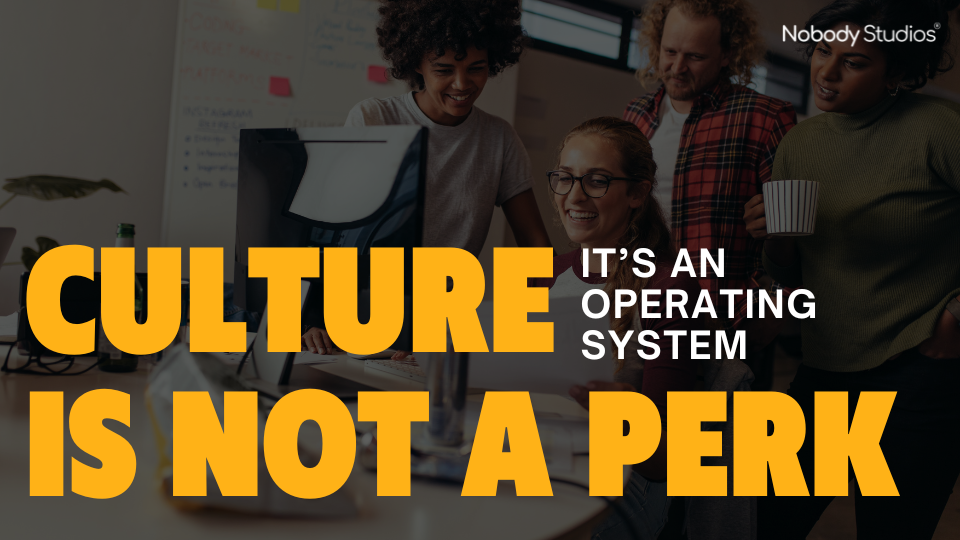
Culture isn’t decoration. It’s infrastructure..
It determines how decisions are made, how conflict is handled, how feedback flows, and whether innovation thrives or stalls. In environments defined by rapid change, experimentation, and uncertainty, culture becomes either a growth accelerator or a silent constraint.
Here’s what modern leaders need to understand about building culture intentionally.
1. Psychological Safety Is a Performance Strategy
Teams cannot move fast if people are protecting themselves.
When individuals feel judged, blamed, or punished for being wrong, they default to defense. They withhold ideas. They avoid calculated risks. They optimize for self-preservation instead of collective progress.
Psychological safety isn’t about comfort — it’s about performance. It allows teams to:
- Surface risks early
- Admit uncertainty
- Challenge ideas without challenging people
- Learn publicly instead of hiding mistakes
In high-velocity environments, speed depends on how quickly teams can expose and correct errors. That only happens when speaking up feels safe.
2. Separate the Person from the Process
One of the most common cultural breakdowns happens when operational friction becomes personal.
When bottlenecks arise, it’s easy to assign blame to individuals. But most bottlenecks are systemic: unclear ownership, broken feedback loops, unrealistic timelines, or misaligned incentives.
When leaders frame problems as personal failures, walls go up. When they frame them as system issues, collaboration increases.
The shift is subtle but powerful:
- Replace “Who caused this?” with “What in the system allowed this?”
- Replace blame with diagnosis.
- Replace accusation with curiosity.
Strong cultures fix systems without fracturing trust.
3. Belonging Drives Contribution
Inclusion is often discussed at a surface level, but belonging is what unlocks performance.
Belonging means people feel:
- Heard
- Respected
- Valued for their perspective
- Safe contributing without assimilation
When individuals don’t feel they belong, cognitive bandwidth is spent on monitoring perception instead of solving problems. When they do belong, that energy is redirected toward creativity and collaboration.
Belonging isn’t built through slogans. It’s built through consistent behaviors:
- Leaders who listen without interrupting.
- Managers who invite dissenting views.
- Teams that reward contribution over conformity.
4. Feedback Is a Skill, Not an Event
Most organizations say they value feedback. Few teach people how to give it well.
Effective feedback is:
- Specific, not vague.
- Timely, not delayed.
- Focused on behavior, not character.
- Framed around impact, not intent.
Poorly delivered feedback erodes trust. Skillful feedback strengthens it.
Leaders who model this consistently create environments where course correction becomes normal rather than threatening. That normalization is essential for experimentation-heavy cultures.
5. Diversity Without Inclusion Is Untapped Potential
Diverse teams outperform homogeneous ones — but only when inclusion is present.
If diverse voices are present but not empowered, the advantage disappears. Innovation comes from cognitive diversity: different lived experiences, disciplines, and ways of thinking challenging each other constructively.
The goal isn’t uniform agreement. It’s productive tension.
Organizations that master this create better decisions because more perspectives are actively shaping outcomes.
6. Culture Must Be Designed — Not Assumed
Culture forms whether you design it or not.
If left unexamined, it becomes shaped by the loudest voices, the earliest hires, or unspoken norms. Intentional culture requires clarity around:
- What behaviors are rewarded?
- What behaviors are tolerated?
- How are decisions actually made?
- How is conflict handled?
Leaders set culture not through mission statements, but through repeated actions. What you model becomes permission. What you ignore becomes precedent.
7. Accountability and Empathy Are Not Opposites
There is a misconception that strong accountability requires toughness devoid of empathy. In reality, the strongest cultures hold both.
Empathy ensures people feel understood.
Accountability ensures standards remain high.
When empathy is absent, accountability feels like punishment.
When accountability is absent, empathy feels like leniency.
Balanced cultures make it clear:
You are supported.
And you are responsible.
8. High-Growth Environments Magnify Cultural Flaws
As organizations scale, unresolved cultural issues compound.
Small misalignments become large fractures. Informal communication patterns break down. Founders’ implicit expectations must become explicit systems.
The earlier culture is defined, practiced, and reinforced, the easier it is to scale without losing cohesion.
The Real Competitive Advantage
Technology changes. Markets shift. Products evolve.
But culture determines how effectively teams adapt to those changes.
In environments built around experimentation, speed, and innovation, culture becomes a force multiplier. It dictates whether teams learn quickly or hide mistakes. Whether conflict produces clarity or resentment. Whether diversity fuels insight or division.
The strongest organizations don’t treat culture as a side initiative.
They treat it as an operating system — one that powers everything else.