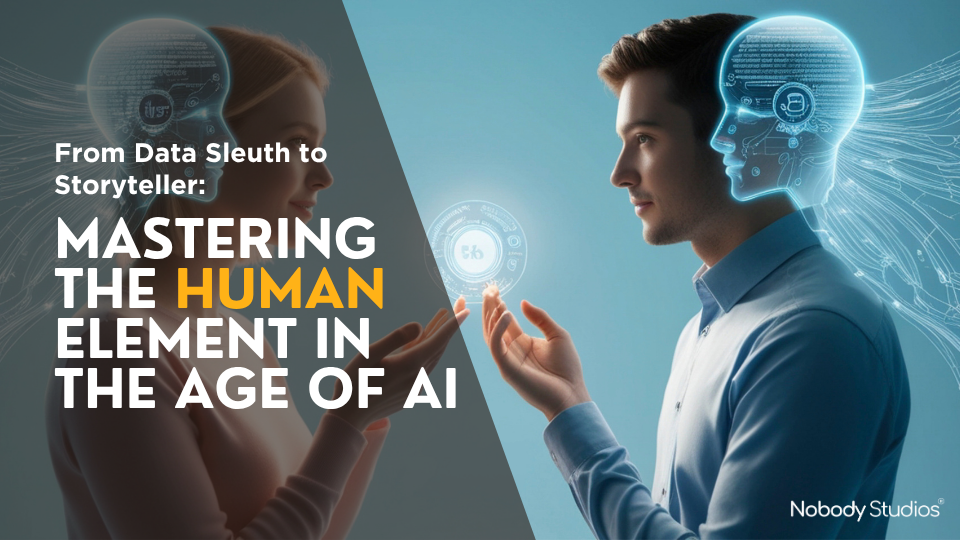

In an era where “AI” is the marketing label for almost everything, it is easy to lose sight of the fundamentals that actually drive value. True innovation isn’t just about the tools you use; it’s about the problems you solve and how you communicate that value to “regular humans”.
Drawing from decades of experience in forensic analytics and corporate innovation, here are the essential insights for navigating the intersection of technology, storytelling, and problem-solving.
1. Fall in Love with the Problem, Not the Solution
The most common mistake for founders—especially those without a technical background—is starting with the technology. Whether you call it data science or AI, the foundation remains the same: What specific problem are you solving?.
- The “Mom Test”: Beyond your immediate circle, who actually needs this product?.
- Validation Over Stealth: Avoid building in “stealth mode” for years. Use waitlists as an early indicator of market demand.
- Avoid the “Wrapper” Trap: If your product is merely a thin layer over a Large Language Model (LLM), it is vulnerable. The major AI players can replicate that functionality in 48 hours.
2. The Eight Pillars of Storytelling
Technical prowess is often sidelined because experts struggle to translate their work for business leaders. To bridge this gap, you must master the art of the narrative.
- Start with a Question: Never showcase data without context. Before you crunch numbers, ask: What is the core question we are trying to answer?.
- Show, Don't Tell: Move away from 40-slide PowerPoint decks that cause audiences to zone out. Use engaging methods—like physical props or live demonstrations—to make concepts tangible.
- The “Good Editor” Rule: Less is more. Provide enough to intrigue, but leave space for your audience to ask questions. The more you talk without focus, the less impressive you sound.
3. Practical AI for Non-Technical Leaders
You no longer need deep technical skills to build or automate. The barrier to entry has shifted from coding to prompting and process integration.
- The 10-Minute Rule: In today's landscape, if a task takes more than 10 minutes, there is likely an AI tool that can assist or automate it.
- Automation vs. Intelligence: Most current “AI” value lies in automation—gluing different processes together to create a seamless workflow.
- The “Digital Twin” Future: We are moving toward a world of “agentic” AI, where digital personas handle emails, calls, and research based on your personal style and patterns.
4. A Curated AI Toolkit for Creators
If you are looking to streamline your workflow, start with these highly-vetted tools that offer high value with low friction:
| Task | Recommended Tool | Why It Matters |
| Video Editing | InShot | Makes mobile editing semi-professional and accessible for non-editors. |
| Content Summary | NoteGPT | Excellent for transcribing and identifying the “crux” of long-form content. |
| Knowledge Mgmt | NotebookLM | Use it to synthesize your own recordings or documents into new formats. |
| Transcription | Veed / Otter | Automated captions and meeting summaries are now industry standards. |
The Human Bottom Line
As AI evolves to mimic empathy and compassion, the danger is losing genuine human connection. While AI can automate your research and edit your videos in a fraction of the time, it cannot replace the human element of “why” we do what we do.
Embrace the technology to remove the “grunt work,” but stay grounded in the human problems that sparked your journey in the first place.