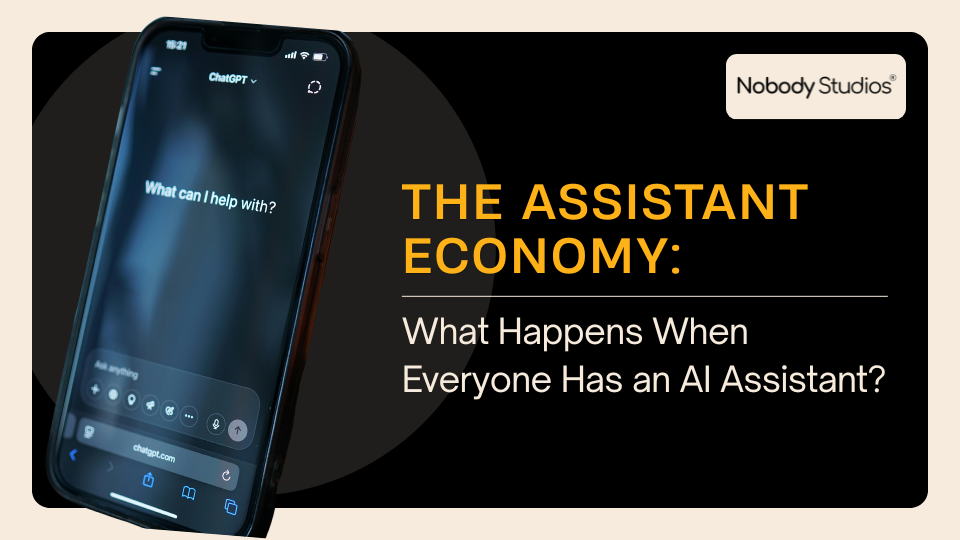

For the last decade, AI was largely invisible—an algorithm predicting your next playlist or filtering spam from your inbox. Today, we are transitioning into the era of the ubiquitous agent. We are moving rapidly toward a world where every individual possesses a highly personalized, context-aware, autonomous AI assistant.
When billions of people have a digital co-pilot capable of executing complex tasks, scheduling, negotiating, and coding, the structure of our daily lives, economy, and society will shift fundamentally.
Here is a deep dive into the profound transformations, structural changes, and emergent challenges of a world powered by ubiquitous AI assistance.
1. The Hyper-Personalization of Daily Life
When everyone has an AI assistant, the friction of modern life begins to evaporate. These assistants won’t just respond to commands; they will operate proactively based on deep contextual knowledge of your habits, biology, and preferences.
- Dynamic Time Management: Instead of manually booking appointments, AI assistants will talk to other AI assistants. A doctor’s appointment, a dinner with friends, and a car service will be cross-negotiated in milliseconds, optimizing for your biological peak energy hours and low-stress travel routes.
- Predictive Health & Wellness: Integrated with wearables, your digital assistant changes from a passive tracker to a proactive health advocate. It will analyze biomarker trends, cross-reference them with your medical history, coordinate directly with your physician’s AI, and adjust your nutrition or sleep schedule before symptoms even manifest.
- Cognitive Offloading: The mundane mental load of managing household logistics, paying bills, and remembering birthdays shifts entirely to the background, freeing up massive amounts of human working memory.
2. The Shift from Consumption to Curation
The internet as we know it is built on an attention economy—platforms compete to get your eyeballs on their pages. AI assistants completely invert this dynamic, moving us into a curation economy.
When you want to buy a new appliance, learn about a political event, or research a product, you won’t browse Google or scroll through social media feeds. Your AI assistant will crawl the web, filter out search engine optimization (SEO) spam, parse through thousands of reviews, evaluate raw data, and present you with a synthesized, unbiased summary tailored to your exact criteria.
Economic Implication: Traditional digital advertising, search engine marketing, and algorithmic clickbait will face structural obsolescence. Brands will no longer market to human consumers; they will have to market to the highly analytical AI agents representing those consumers.
3. The Democratization of Complex Expertise
Historically, entering a specialized field required years of rote technical training. Ubiquitous AI shifts the focus from execution syntax to conceptual architecture.
- The Rise of the “Generalist Creator”: An individual with an idea can lean on their AI assistant to act as a senior software engineer, a corporate attorney, a financial forecaster, and a graphic designer simultaneously. This lowers the barrier to entry for entrepreneurship to near zero.
- Hyper-Individualized Learning: Education changes fundamentally. Every student, regardless of socioeconomic background, gains access to a world-class, infinitely patient tutor. The AI adapts its teaching style in real time—using sports analogies for a kinesthetic learner or visual breakdowns for another—ensuring true mastery of concepts rather than standardized memorization.
4. The Emergent Macro-Effects: Systems at Scale
What happens when these individual benefits collide at a societal scale? The macro-effects will alter market dynamics entirely.
Game Theory & AI-to-AI Markets
As millions of autonomous agents negotiate on behalf of humans, we will see the rise of highly efficient, algorithmic marketplaces. Imagine thousands of AI assistants negotiating wholesale prices for electricity, flights, or consumer goods by pooling their users’ buying power instantly.
The Changing Nature of Labor
If an AI assistant can manage spreadsheets, draft basic code, track logistics, and handle administrative communications, the baseline expectation for human workers shifts. The premium moves heavily toward:
- High-Level Strategic Thinking: Defining the why and the what, while AI handles the how.
- Deep Empathy and Human Connection: Roles requiring genuine emotional intelligence, trust, and physical presence become irreplaceable.
5. The Dark Side: Friction and Vulnerabilities
A fully agentic world introduces unprecedented systemic risks that society must actively prepare for.
- Echo Chambers 2.0 (Algorithmic Isolation): If your AI assistant perfectly curates your information diet to match your preferences, you risk living in a flawless cognitive bubble. Exposure to serendipitous, challenging, or conflicting ideas could plummet, deepening societal polarization.
- Agentic Chaos: When millions of autonomous AI models interact under high frequency, we could witness emergent behaviors—like systemic flash crashes in financial markets or massive digital traffic jams—caused by unexpected feedback loops between competing algorithms.
- The Ultimate Security Surface: If your AI assistant knows your banking details, your health vulnerabilities, your calendar, and your deepest thoughts, it becomes the ultimate target for cyberattacks. A breach is no longer just a stolen password; it is an identity compromise.
The Path Forward: Defining the Boundaries
When everyone has an AI assistant, humanity isn’t replaced; it is amplified. The defining skill of the next generation will not be technical compliance, but intent clarity—the ability to articulate precise, ethical, and ambitious visions for the AI to execute.
The ultimate goal of a world filled with digital assistants isn’t to make humans behave more like computers, but to free humans to be remarkably more human.